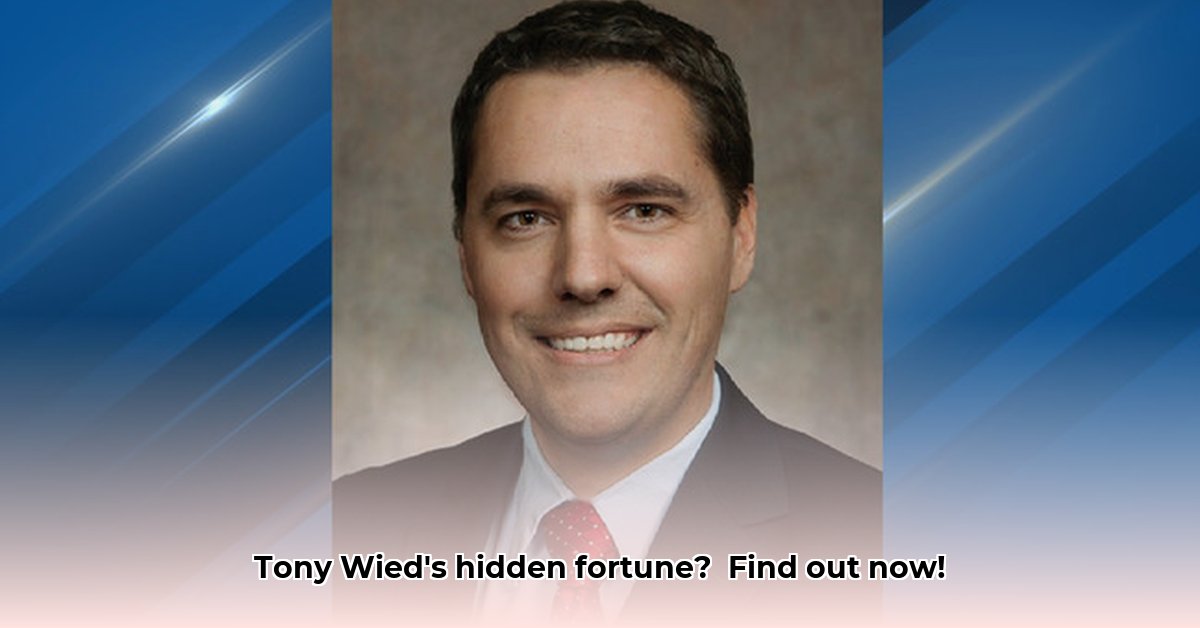
Data Gaps Cloud Congressman Wied's Financial Transparency
Congressman Tony Wied, the Republican representative from Wisconsin, began his term in 2024. While his political activities are a matter of public record, obtaining a clear picture of his personal finances for the 2025-2026 period proves surprisingly difficult, raising significant concerns about transparency in government. A review of standard disclosure sources reveals a significant lack of readily available information.
The Missing Data: A Transparency Void
Attempts to ascertain Congressman Wied's net worth for 2025-2026 have yielded limited results from both official and independent sources. The Federal Election Commission (FEC) website currently displays no financial disclosures for this period. Similarly, QuiverQuant, a financial data service that often tracks the assets of public figures, reports "No trades found," hindering any net worth calculation. This absence of data is particularly concerning given the importance of transparent financial disclosures for elected officials. The lack of information prevents a comprehensive assessment of potential conflicts of interest and compliance with the STOCK Act (Stop Trading on Congressional Knowledge), a law designed to prevent insider trading by members of Congress.
Data That Is Available: A Limited View
Currently, publicly available information regarding Congressman Wied’s finances is extremely limited. His committee assignments (Agriculture, Small Business, and Transportation and Infrastructure) are known, but these alone do not offer insight into his potential financial interests or risks of conflicts of interest. The absence of detailed financial disclosures leaves a critical knowledge gap.
Implications and Consequences: Erosion of Public Trust
The lack of readily accessible financial information regarding Congressman Wied's assets undermines public trust and hinders accountability. Without transparency, it is impossible to definitively assess whether his legislative actions are influenced by personal financial interests, thereby raising concerns about ethical conduct and potential conflicts of interest. This lack of transparency directly impacts the public's ability to make informed decisions during elections and to hold their representatives accountable for their actions.
Stakeholder Analysis: Shared Responsibility
Several stakeholders bear responsibility for addressing this critical information gap:
- Congressman Wied: Has a direct responsibility to fully and proactively disclose his financial details, exceeding minimum legal requirements to foster public trust and accountability.
- Federal Election Commission (FEC): Must process and make available financial disclosures in a timely and efficient manner, communicating clearly about any delays or technical issues affecting data accessibility.
- Governmental Watchdogs: Should investigate the reasons for the missing data and advocate for improved data access and stricter enforcement of existing regulations on financial disclosures.
- The Public: Must actively demand greater financial transparency from their elected officials and support legislation aimed at improving disclosure practices and enforcing relevant laws.
Regulatory Context: Legal Obligations and Oversight
The lack of readily-available financial information for Congressman Wied directly contradicts existing regulations designed to ensure transparency in government. The STOCK Act, for instance, mandates the disclosure of financial information to avoid conflicts of interest. The current situation highlights a potential failure in both the reporting and enforcement of these crucial laws.
Conclusion: The Urgent Need for Reform
The absence of comprehensive financial data for Congressman Wied underscores a critical need for improved transparency and accountability in government. This case highlights systemic failures in data collection, dissemination, and enforcement. Strengthening mechanisms for timely and easily accessible financial disclosure is paramount. Solutions include establishing a centralized, user-friendly database; requiring more comprehensive and easily analyzable disclosure forms; and implementing stricter enforcement of existing regulations to ensure that all elected officials comply with disclosure laws. Without reform, public trust will continue to erode, and the potential for conflicts of interest will remain unchecked.